Wine knowledge
Alcohol-free wine: 0.0%, how it is made and how to choose
Learn what 0.0% means, how alcohol-free wine is made and how to choose white, rosé, red or sparkling, with delivery in Switzerland.
Alcohol-free wine is generally made as wine first and dealcoholised afterwards. In Switzerland, wine described as dealcoholised may still contain up to 0.5% alcohol by volume. If you specifically want 0.0%, check the exact statement on the bottle. In flavour terms, 0.0 wine is a style in its own right: it is usually lighter and more fruit-forward than its alcoholic counterpart.
An apéritif, dinner or celebration does not have to depend on everyone at the table drinking alcohol. This is where alcohol-free wine becomes useful: it retains its origin in grapes and the winemaking process, while calling for a different way of choosing. To find the right bottle for the occasion, look closely at style, sweetness, grape variety and label.
This guide explains the difference between alcohol-free wine, 0.0 wine and grape juice. It covers how the alcohol is removed, what changes in the flavour and how to choose white, rosé, red or sparkling. The specific examples come from the current WEINEXPERIENCE 0.0 selection, delivered exclusively within Switzerland.
- Check on the bottle
- 0.0%
- Styles in the selection
- 4
- White, rosé & sparkling
- 8–10°C
- Delivery area
- CH
What is alcohol-free wine?
Dealcoholised wine has undergone alcoholic fermentation. During this process, yeasts convert some of the grape sugar into alcohol and carbon dioxide. Only then is the alcohol fully or partially removed using an authorised technical process. Swiss rules have been aligned with those of the European Union: dealcoholised wines with no more than 0.5% alcohol by volume remain wine products.
“Alcohol-free” and “0.0%” are therefore not automatically the same. The broader category may contain a small residual amount. A bottle marked 0.0% is specifically declared as such by the producer. If complete avoidance matters for medical, religious or personal reasons, rely on the exact product declaration and seek professional advice when appropriate.
Is alcohol-free wine just grape juice?
No. Grape juice is bottled before alcoholic fermentation or stabilised so that fermentation does not occur. Dealcoholised wine was wine first. Fermentation creates aromas and changes acidity, sweetness and texture. Once the alcohol has been removed, the result is lighter than classic wine, but it does not simply taste like grape juice.
| Product | How it is made | Statement | When choosing |
|---|---|---|---|
| Wine with 0.0% | Generally fermented first and dealcoholised afterwards. | 0.0% explicitly stated on the bottle. | The declaration for the specific product is decisive. |
| Dealcoholised wine | Made as wine first, then the alcohol is removed. | No more than 0.5% ABV under the Swiss definition. | A small residual amount may remain. |
| Grape juice | No complete alcoholic fermentation. | It is not dealcoholised wine. | A different profile of sweetness, acidity and texture. |
How is alcohol-free wine made?
The journey starts in the vineyard and cellar much like a classic wine: harvesting, pressing, fermentation and maturation. To remove the alcohol, the Swiss Federal Food Safety and Veterinary Office identifies three authorised approaches, which can be used separately or in combination:
- Vacuum evaporation. Under reduced pressure, alcohol evaporates at a lower temperature. This helps to limit the wine’s exposure to heat.
- Membrane techniques. Very fine membranes separate components according to their size or physical properties. Alcohol and water can then be treated selectively.
- Distillation. Alcohol is separated through different boiling points. Modern equipment can capture volatile aromas and, in some cases, return them to the wine.
No method can remove alcohol without changing the wine. Alcohol carries aroma, warmth and body. A good base wine, a gentle process and careful balance after dealcoholisation therefore matter. Familia Torres describes Natureo as fully fermented wine from which the alcohol is subsequently removed; the producer has worked in this category since 2008.
What does 0.0 wine taste like?
Alcohol-free wine usually tastes lighter, fresher and less warming than a comparable wine with alcohol. Fruit and acidity can become more prominent, while body and length may be more restrained. Some products balance this with residual sweetness, carbonation or recovered wine aromas. The figure 0.0% alone does not tell you whether a wine is dry, medium-dry or fruity.
A more useful expectation is to avoid looking for a perfect copy of your usual bottle. Choose a style that works on its own terms. Sparkling wine gains extra energy from its bubbles. Aromatic whites can carry fruit and perfume well. Rosé is often fresh and easy-going. With red wine, expect a lighter structure and consider serving it slightly cooler.
Which alcohol-free wine suits your occasion?
Start with the moment rather than the colour. Is the bottle opening an apéritif, accompanying a meal or serving as a toast? Grape variety, sweetness and serving temperature can then narrow the choice.

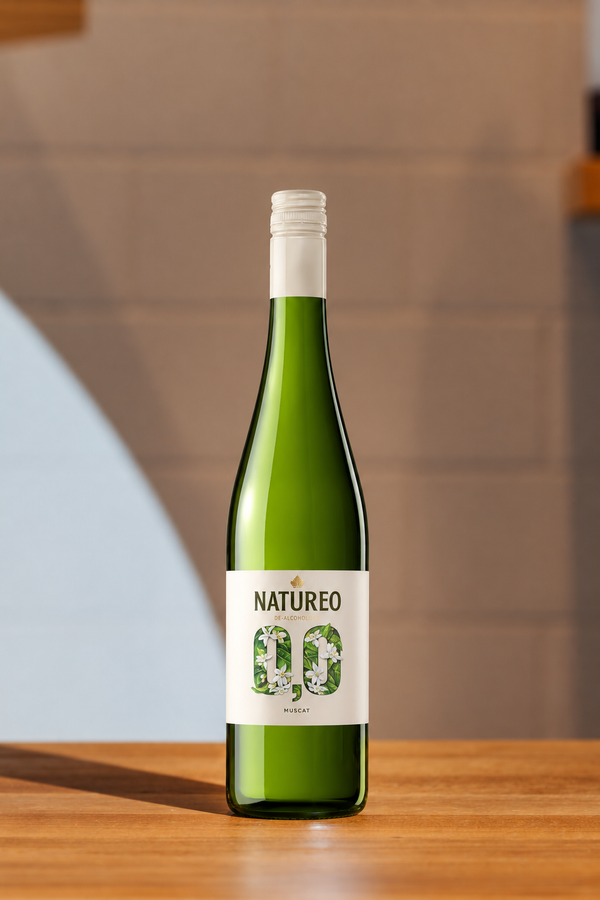
Natureo Blanco Muscat 0.0%
Aromatic and fresh. An approachable starting point, served well chilled.

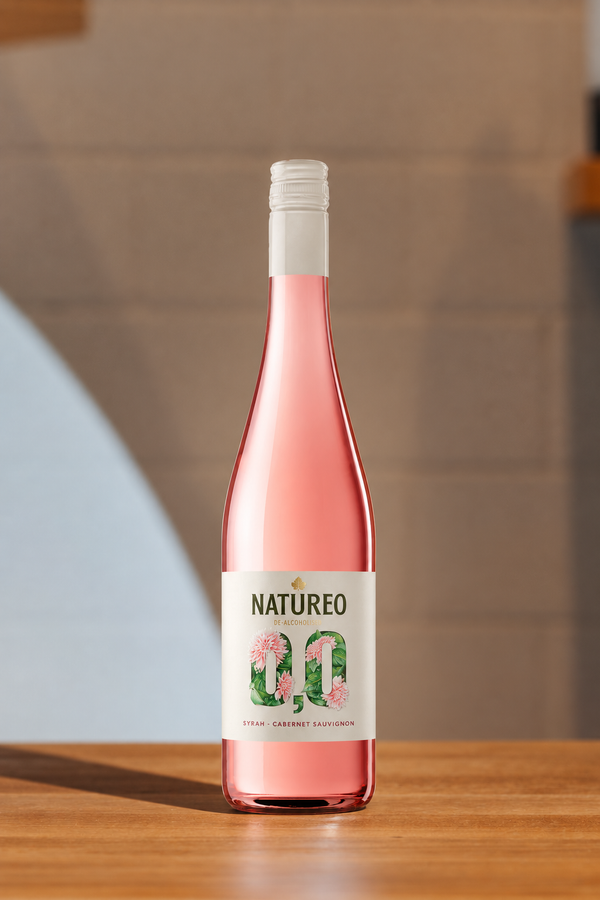
Natureo Rosado Garnacha 0.0%
Red fruit and a lively character for relaxed occasions.

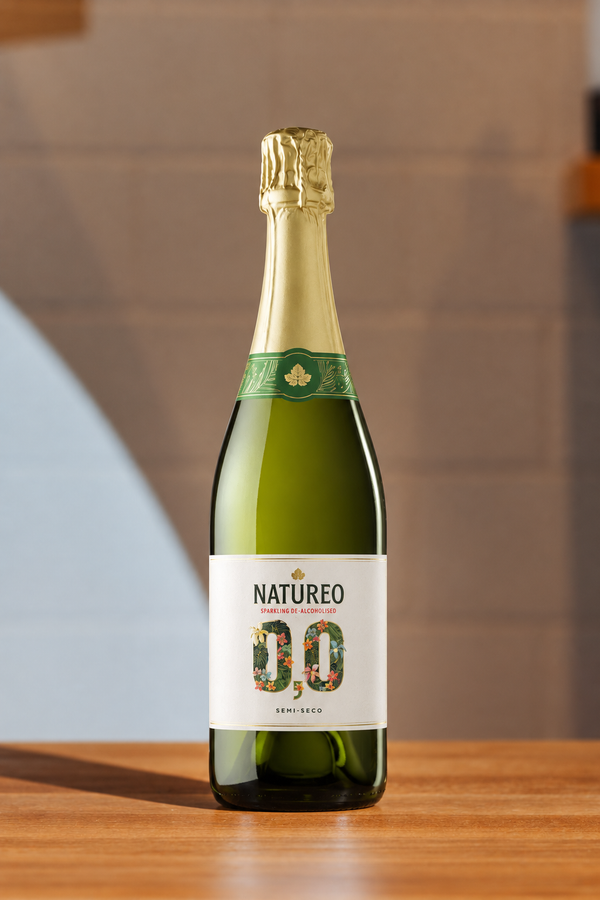
Natureo Sparkling Semi-Seco 0.0%
Bubbles and a medium-dry style; begin by serving it very well chilled.

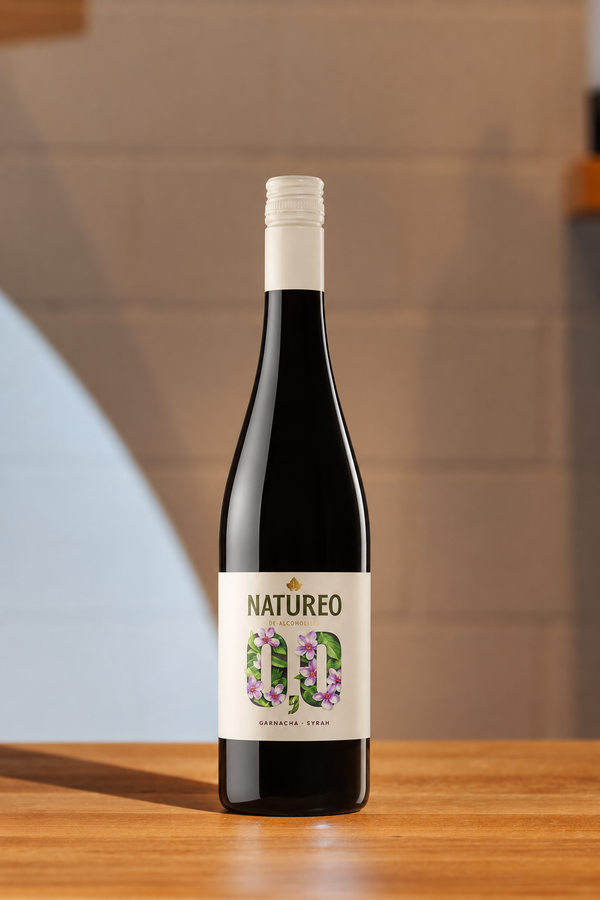
Natureo Tinto Garnacha Syrah 0.0%
Red fruit and spice in a lighter structure; try it lightly chilled.
These descriptions are based on product data and producer information, rather than a claimed blind tasting by our editorial team. The vintage, availability and details on the bottle you receive take precedence.
Five details to check on the label
- Alcohol levelCheck whether 0.0% is stated or only the broader term “alcohol-free”.
- Sweetness and sugarCompare the nutrition declaration; alcohol-free does not mean sugar-free.
- Ingredients and allergensCheck the product declaration for sulphites and specific dietary needs.
- Grape and styleMuscat, Garnacha, Syrah and still or sparkling offer useful clues.
- Serving adviceStart with the producer’s guidance; a light 0.0 wine can taste broad when too warm.
Pairing alcohol-free wine with food
The basic pairing logic remains: match intensity with intensity, use freshness to balance fat, and make sure the wine is at least as sweet as the dish. Since 0.0 wine often has less body, light or medium-intensity dishes are usually the easiest place to begin.
- ApéritifSalty snacksSparkling 0.0 brings freshness and cleanses the palate.
- White 0.0Fish, seafood and riceAn aromatic white adds fruit and acidity.
- Rosé 0.0Salads and vegetablesA flexible, light choice for antipasti and grilled vegetables.
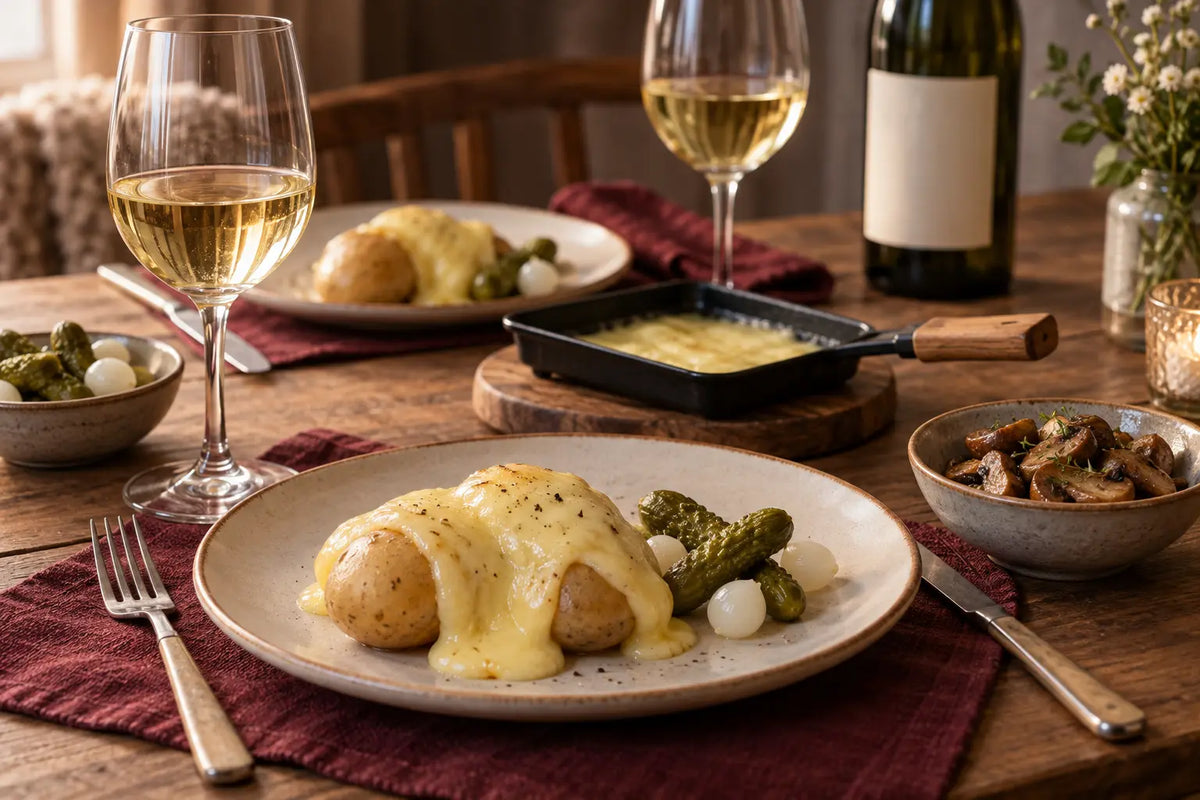
- Red 0.0Pasta, mushrooms and cheeseFruity styles often work well when lightly chilled.
- BalanceSpicy or sweet?Check the sweetness: a very light, dry style can disappear next to chilli or sweet sauces.

Light food, freshness and the occasion often matter more than colour alone.
Learn more about food pairingServing and storing after opening
White, rosé and sparkling
8–10°CBegin well chilled and pour small amounts.
Red 0.0
CoolerTry it slightly cooler than a full-bodied classic red.
After opening
ChilledReseal it; the producer’s guidance remains your reference.
After opening, reseal the bottle and keep it in the fridge. Without the preservative effect of a typical alcohol level, the flavour may change more quickly. One fixed number for every bottle would be misleading: follow the producer’s guidance and check aroma, colour and taste. Find more fundamentals in our guide to storing open wine and our serving-temperature guide.
Choosing alcohol-free wine in Switzerland
WEINEXPERIENCE carries four Natureo styles with 0.0%: white, rosé, red and sparkling. Compare grape variety, sweetness and occasion at your own pace. We deliver exclusively within Switzerland; current prices and availability appear on each product page.
Frequently asked questions about alcohol-free wine
Is alcohol-free wine completely free of alcohol?
Not necessarily. Under the rules adopted in Switzerland, dealcoholised wines contain no more than 0.5% alcohol by volume. If you specifically want 0.0%, check that statement on the individual bottle.
What is the difference between alcohol-free wine and grape juice?
Dealcoholised wine is fermented first and has its alcohol removed afterwards. Grape juice does not undergo full alcoholic fermentation. This creates differences in aroma, acidity, sweetness and texture.
Does alcohol-free wine contain a lot of sugar?
There is no single answer for the whole category. Some products use residual sugar or grape must for balance, while others are drier. Compare the nutrition and ingredient information for the individual bottle.
Does 0.0 wine always have fewer calories?
Removing alcohol eliminates one source of energy, but sugar and other ingredients influence the total. The reliable answer is in the nutrition declaration of the individual product; “0.0%” is not a calorie statement.
Is 0.0 wine suitable during pregnancy or with medication?
This guide does not replace medical advice. Check the explicit 0.0% declaration and the ingredient list, and discuss personal medical questions with a qualified professional.
How long does alcohol-free wine last after opening?
Reseal it, keep it chilled and follow the producer’s guidance. Style, bottling and storage conditions all affect its life. If the aroma, colour or taste has clearly changed, do not continue serving it.
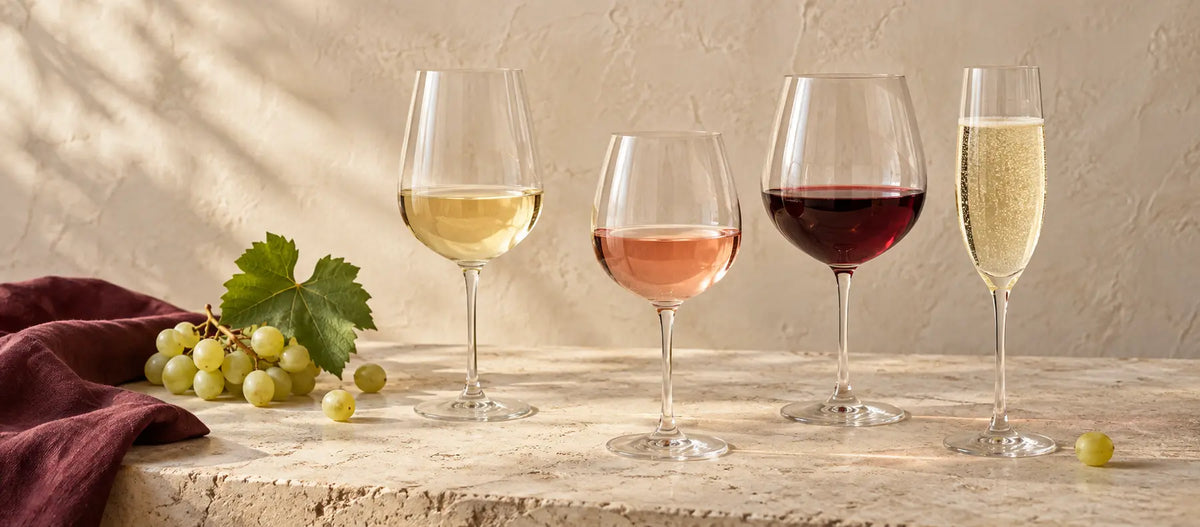
Basis and sources: Fedlex — Beverage Ordinance, version of 1 August 2026; FSO — alcohol consumption 1992–2022; Familia Torres — Natureo Muscat; Familia Torres — Natureo 0.0 in 2026. Product data and catalogue checked on 27 September 2026. Editorial AI illustrations: the glasses and table scene represent styles and occasions rather than the exact products for sale.